
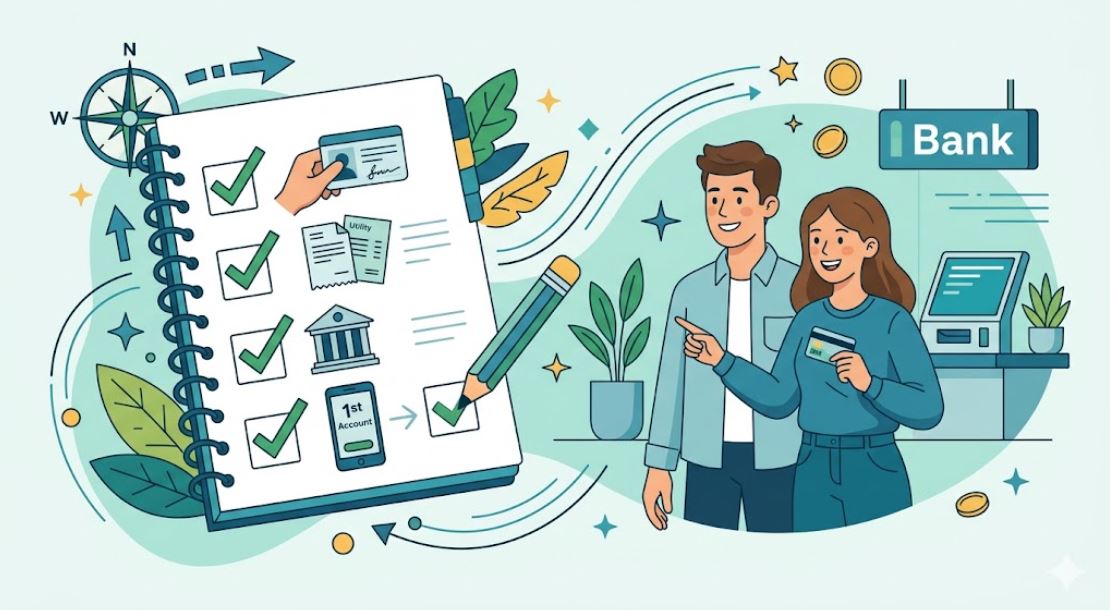
Opening your first checking account is an important step toward managing your money wisely. Whether you’re a student, a young professional, or simply starting your financial journey, choosing the right checking account can help you avoid unnecessary fees, access convenient banking services, and build a strong financial foundation.
In this guide, we’ll walk you through the ultimate checklist for opening your first checking account and explain everything you need to know before choosing a bank.
What Is a Checking Account?
A checking account is a bank account designed for everyday transactions. It allows you to:
- Deposit money
- Withdraw cash
- Pay bills
- Make purchases with a debit card
- Transfer funds electronically
- Receive direct deposits from employers
Unlike savings accounts, checking accounts are intended for frequent use and easy access to your money.
Why Opening the Right Checking Account Matters
Not all checking accounts are created equal. Some banks charge monthly maintenance fees, while others offer free checking with valuable features like early direct deposit, overdraft protection, and mobile banking.
Choosing the right account can save you hundreds of dollars over time and make managing your finances much easier.
Ultimate Checklist Before Opening Your First Checking Account
1. Verify Your Eligibility
Most banks require:
- Government-issued photo ID
- Social Security Number (SSN) or Individual Taxpayer Identification Number (ITIN)
- Proof of address
- Minimum age requirement (usually 18 years old)
Students and minors may need a parent or guardian to co-sign.
2. Compare Monthly Maintenance Fees
One of the most important factors is the monthly service fee.
Look for accounts that offer:
- No monthly fee
- Fee waivers with direct deposit
- Student checking options
- Free online banking
Avoid accounts that charge high fees unless they provide significant benefits.
3. Check Minimum Deposit Requirements
Some banks require an opening deposit.
Examples include:
- $0 minimum deposit
- $25 minimum deposit
- $100 or more for premium accounts
If you’re opening your first account, choosing a bank with no minimum deposit can be a smart option.
4. Confirm FDIC Insurance
Always ensure your bank is insured by the Federal Deposit Insurance Corporation (FDIC).
FDIC insurance protects deposits up to:
$250,000 per depositor, per insured bank, per ownership category.
This protection helps keep your money safe if a bank fails.
5. Review ATM Access
Ask yourself:
- Are there fee-free ATMs nearby?
- Does the bank reimburse ATM fees?
- Is there a large ATM network?
Frequent ATM users can save money by choosing banks with extensive ATM coverage.
6. Evaluate Mobile Banking Features
Modern banking should be convenient.
Look for features such as:
- Mobile check deposit
- Bill pay
- Account alerts
- Spending tracking
- Card lock/unlock controls
- Peer-to-peer payments
A strong mobile banking app can significantly improve your banking experience.
7. Understand Overdraft Policies
Overdraft fees can quickly become expensive.
Check whether the bank offers:
- No overdraft fees
- Overdraft protection
- Low-balance alerts
- Grace periods
Many online banks now offer more consumer-friendly overdraft policies.
8. Look for Direct Deposit Benefits
Many checking accounts offer perks when you set up direct deposit.
Potential benefits include:
- Early paycheck access
- Fee waivers
- Cash bonuses
- Higher account privileges
Direct deposit is often one of the easiest ways to maximize account benefits.
9. Consider Debit Card Features
Your debit card will likely be your primary payment method.
Look for:
- Contactless payments
- Mobile wallet compatibility
- Fraud protection
- Card replacement services
- International transaction support
These features can improve both convenience and security.
10. Review Customer Support Options
Good customer service matters.
Check whether the bank offers:
- 24/7 support
- Live chat
- Phone support
- Local branches
- Secure messaging
Reliable customer support can save time when problems arise.
11. Examine Account Security Features
Protecting your money should be a priority.
Look for:
- Two-factor authentication
- Biometric login
- Fraud monitoring
- Instant transaction alerts
- Secure encryption
The best banks invest heavily in account security.
12. Compare Online Banks vs Traditional Banks
Online Banks
Pros:
- Lower fees
- Higher interest rates
- Better digital tools
Cons:
- Limited branch access
Traditional Banks
Pros:
- Physical branches
- Face-to-face support
- Cash deposit convenience
Cons:
- Higher fees in some cases
Choose the option that best fits your banking habits.
13. Read the Fine Print
Before opening any account, carefully review:
- Fee schedules
- Account disclosures
- ATM charges
- Overdraft policies
- Account closure fees
Understanding the terms can prevent surprises later.
Common Mistakes First-Time Account Holders Make
Many people make avoidable mistakes when opening their first checking account.
Common errors include:
- Ignoring monthly fees
- Not setting up account alerts
- Forgetting to track spending
- Using out-of-network ATMs
- Overdrafting the account
- Failing to compare multiple banks
Avoiding these mistakes can help you build healthy financial habits.
Benefits of Having a Checking Account
A checking account offers several advantages:
- Secure money storage
- Convenient bill payments
- Direct deposit access
- Debit card purchases
- Improved financial management
- Easier budgeting
It is often the foundation of a strong personal finance strategy.
Final Thoughts
Opening your first checking account is a major financial milestone. By following this checklist, you can choose an account that matches your needs, minimizes fees, and provides the tools necessary to manage your money confidently.
Take the time to compare banks, review account features, and understand all fees before making a decision. The right checking account can simplify your daily finances and help you build a solid financial future.
